


The modern automotive industry is shaped by two key trends that are driving radical changes in vehicle body design: stricter emission legislation and increasing safety requirements. The EU’s target to cut transport emissions by 90%, by 2050, combined with the planned ban on new combustion-engine car sales from 2035, is forcing manufacturers to dramatically reduce vehicle weight. At the same time, Euro NCAP crash tests demand ever-stronger structures to protect occupants.
The solution to this paradox lies in multi-material design – the intelligent combination of different materials and advanced joining technologies to achieve both lightness and strength.
Material trends
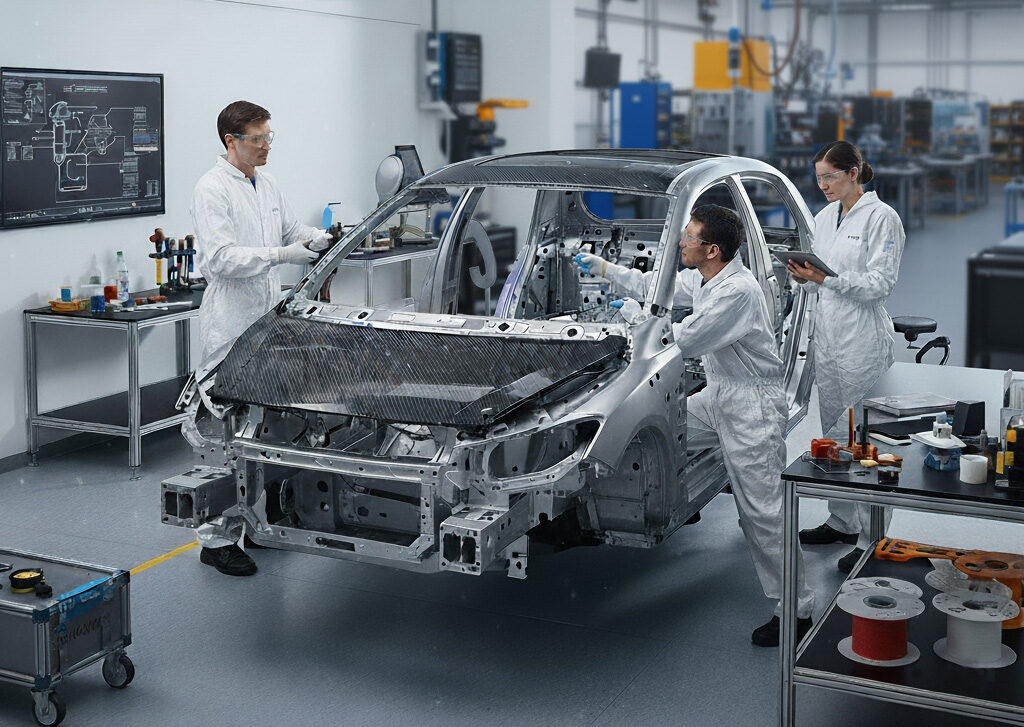
The fundamental shift is away from the idea of a single universal material towards the philosophy of “the right material in the right place”. The goal is to create an extremely strong safety cell surrounded by energy-absorbing crash zones. This approach typically involves three main material groups.
Advanced and ultra-high-strength steels (AHSS/UHSS)
Steel is not disappearing from body construction – it is evolving. Modern hot-formed steels achieve strengths exceeding 1,500 MPa, up to six times higher than conventional steels. They form the backbone of the safety cage (A/B pillars, sills).
Aluminium Alloys
With one-third the density of steel, aluminium plays a key role in weight reduction. An aluminium structural framework can be up to 40% lighter than a comparable steel one. It is used for exterior panels (doors, bonnets) and load-bearing profiles. For example, the Audi A8 body is made up of 58% aluminium components.
Carbon-Fiber-Reinforced Composites (CFRP)
CFRP represent the pinnacle of lightweight construction. Due to high costs, its use remains concentrated in the premium segment. In the Audi A8, the rear wall made of CFRP contributes 33% to the vehicle’s overall torsional stiffness.
Trends in joining technologies
Combining steel, aluminium, and composites has led to a move away from traditional welding. The industry is shifting from sparks to adhesives and rivets. The dominant direction is the “adoption of cold joining methods”.
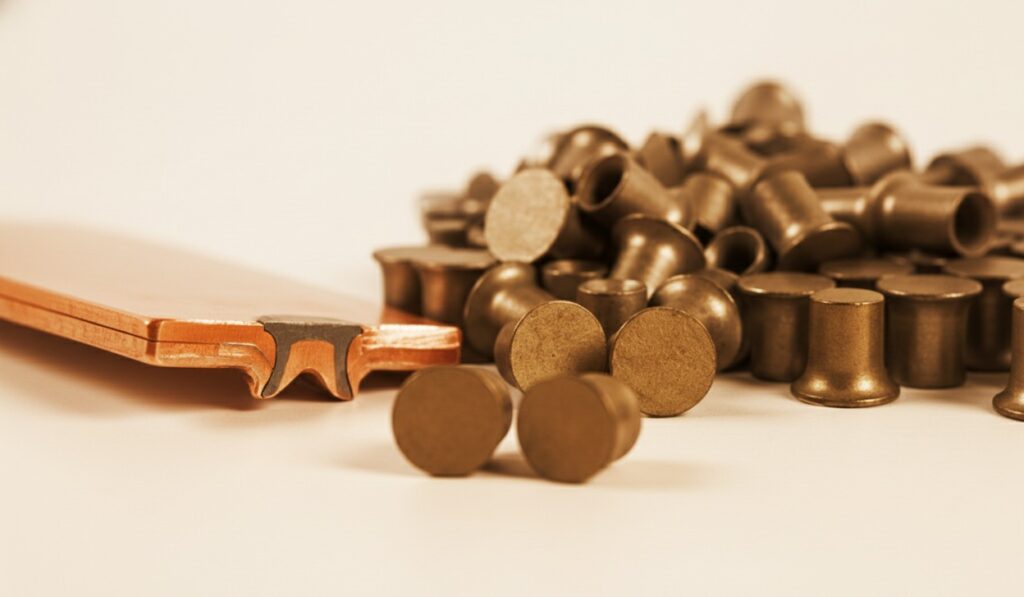
Self-Piercing Riveting (SPR)
SPR has become an industry standard for joining aluminium and steel. It is a fast, clean process that creates no heat-affected zone, thereby maintaining the mechanical properties of the materials.
Clinching
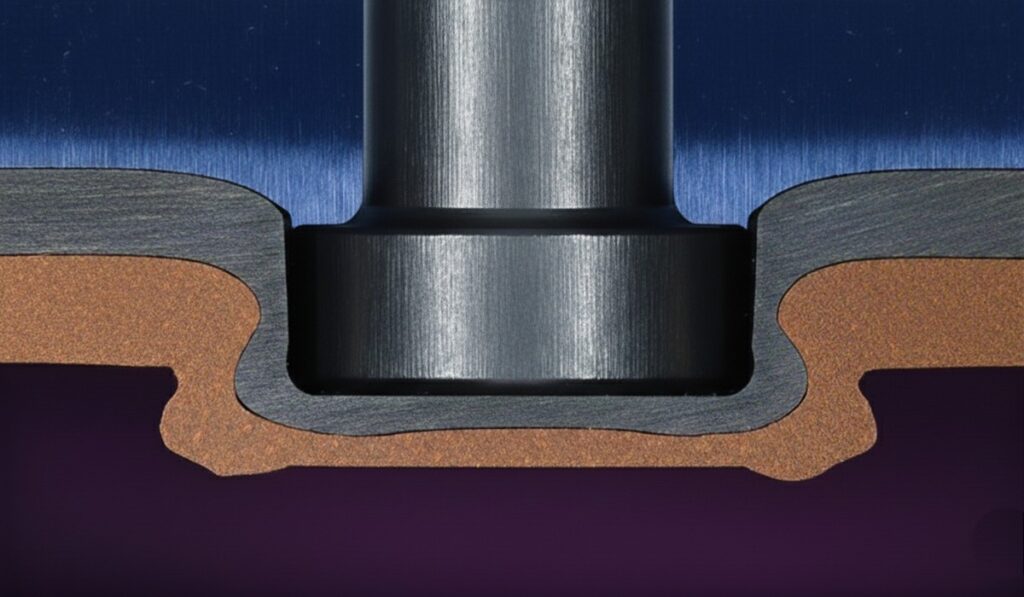
This cold-forming method joins sheets without any additional elements such as rivets or screws. Using a punch and die, the materials are pressed together to create a solid, button-like interlock. As no heat is applied, surface coatings (e.g. galvanisation) remain intact. The process is energy-efficient, emission-free, and spark-free – often replacing spot welding. It is ideal for joining sheets of different thicknesses and materials, including steel, aluminium, and stainless steel.
Structural adhesive bonding
The use of high-strength adhesives is on the rise. Structural bonding enables the joining of non-weldable materials (e.g. composites), increases overall body stiffness, reduces vibration, and prevents galvanic corrosion between dissimilar metals.
Friction Stir Welding (FSW)
This innovative process joins metals without melting them. FSW is becoming a key technology for electromobility, especially for welding aluminium battery trays and heat exchangers.
Emerging trends: 3D printing and smart materials
Technological development is accelerating, and new innovations are already shaping the future of automotive manufacturing. Additive manufacturing (3D printing) allows for the creation of topologically optimised, extremely lightweight yet strong parts that cannot be produced by traditional methods. While currently used mainly for prototypes and tooling, it is rapidly progressing towards final component production.
New materials are also coming to the forefront, such as aluminium foam, which is ultra-light and offers excellent impact energy absorption, and sustainable bio-composites made from natural fibres.
Real-world examples
- Audi A8: The Audi Apace Frame body consists of 58% aluminium components. The CFR/ rear wall contributes 33% to overall torsional stiffness, while key safety structures are made from high-strength steel.
- BMW i3: The revolutionary “LifeDrive” architecture uses a passenger cell made almost entirely of CFRP. This carbon cage bonded to an aluminium chassis primarily with adhesives, eliminating the need for welding.
- Tesla Model Y – Uses an aluminium-intensive body structure and introduces “giga-casting”- giant single-piece castings that replace dozens of smaller parts, significantly reducing joints and production costs. According to Munro & Associates, Tesla eliminated 172 parts and 1,600 spot welds from the Model Y body
The rise of electromobility and autonomous driving will further intensify the demand for lightweight and intelligent structures. The multi-material approach is no longer a temporary trend – it is becoming the new standard. It is already shaping the future of the automotive industry, promising lighter, more efficient, and above all, safer vehicles. If you are working on material joining or related automation challenges, we are ready to help.